Showing posts with label Help Your Sick Cats to Eat. Show all posts

Saturday, April 16, 2011

Assisted Feeding

You will probably have times when your cat refuses to eat. Naturally, you must try to address all possible causes of in appetance, such as stomach acid, mouth ulcers and nausea  the suggestions from last two post to make the food seem more appetising. But if all else fails, there are a couple of other things you can try.

Company While Eating


Many pawrents found this way it's helpful. they would sit by cat encouraging us to eat, praising each mouthful. It does work for some cats.

Feeding by Hand


This is the next stage, where you lift the food out of the bowl and encourage your cat to lick it off your finger or a spoon. It can take hours, and your cat will probably drop lots of the food, but many pawrents found this really helped persuade cat to eat.

Syringe (Assisted or Force) Feeding


Finally, you can try what many people refer to as force feeding, but what I prefer to call assisted feeding. This entails placing your cat's food into a syringe and syringing it gently into the cat's mouth. In particular can be made into a mush with water and syringed in easily. Alternatively, you can puree tinned food (prescription or standard food) using a mixer or blender, add water to make it more liquidy (otherwise it is hard to squeeze out of the syringe), then draw it up into a syringe. Using warm water can make the food more attractive to your cat.

The size syringe you should choose depends upon how strong your hands are - the smaller and weaker your hands are, the harder it is to push a larger syringe.

Sunday, April 10, 2011

Tips on Getting Your Cat to Eat

Kitty Smorgasbord


Until the cat is stable, your pawrents may have to resign themselves to having a "kitty smorgasbord" available for a while. This means your pawrents have a selection of foods for your cat to choose from, which you rotate to suit your cat's current preferences. 

Cat might eat one of the foods one day, then refuse it the next. Sometimes pawrents would offer cat five or six foods before pawrents found one cat would eat. Then a week or so later, a food cat had previously turned down might be back in favour.

Pawrents might found that cat might refuse a food in the kitchen but be prepared to eat the same plateful of food in the lounge. Or cat might eat the food if pawrents moved it back into the middle of the plate. The plate mattered too: cat seemed not to like plastic plates but preferred china.

In our experience, cats who are off their food tend to prefer pâté-type foods to more lumpy foods; often with lumpy foods cats merely lick off the gravy.

If pawrents can persuade your cat to eat of his/her own accord, it is usually much less stressful for both of you; but you may also need to use some of the following tips.


Feeding Little and Often


Try to offer your cat small amounts of fresh food at regular intervals, if necessary taking the food direct to your cat (we used to have a rule that cats eat in the kitchen but that soon went out the window once we were faced with a sick cat). Just offer a spoonful at a time. If your cat eats it, offer a little more.

If you also have the time to offer food frequently, you can find that although your cat only eats a little each time, over the course of a day it can add up to a reasonable food intake. You may also find that this reduces the build up of stomach acid in your cat.

If you are out at work all day, you could try using a timed automated feeder which opens two separate compartments at times of your choosing so that your cat can have access to fresh canned food. These are also useful at night. 


Warming Food


Many cats, do not like food fresh from the refrigerator - it seems to be too cold for them. Try taking the food out of the fridge half an hour before feeding it. 

Alternatively, you can try actually warming your cat's food. The sense of smell (and sometimes of taste) in human renal patients is impaired, and it is thought that this happens to sick cats too. Warming the food makes it smell stronger, which may filter through to the cat and encourage him/her to eat. 

Or microwave the food on a plate for about 4-5 seconds on High, but your oven may vary. If you use the microwave, stir it thoroughly afterwards and make sure it is not too hot - food cooked in the microwave may cook unevenly and contain "hot spots" which could burn your cat if you are not careful.

We have also tried warming the food by adding hot water - again, be sure it is not too hot. Some cats prefer the mushy texture of food that is watered down.

The Feline Advisory Bureau mentions that cats tend to prefer food at a temperature of around 35° C, which happens to be the same temperature as freshly killed prey.


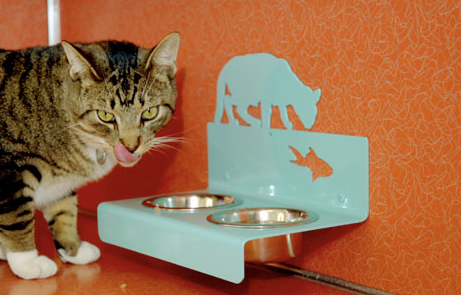
Raising the Food Bowl


Some cats suffer from stomach acid if they have to eat from a bowl on the floor. Raise the bowl will help them eat better


Tempting Extras


You can sprinkle some treats on your cat's food in order to make it more tempting for your cat. 

Catnip


In fact may act as an appetite stimulant in some cats. However, not all cats react to catnip - this is a genetic trait.

Cats International has some information on catnip.
The Feline Advisory Bureau also has information on catnip.

Saturday, April 9, 2011

Help Your Sick Cats to Eat

This is all food, I found from so many websites , and from some suggestions from all friends in CBD. To help your cat eat while they are sick and they hardly to eat anything. It's Additional Nourishment. But it's not something your pawrents should feed us cats in the long terms but which also can help keep them going at times of crisis, or enable them to eat.


Eggs


If you are looking to provide your cat with additional nourishment, one possible food might be eggs.  "Proteins with high biologic value can be readily converted to body proteins with minimal waste production. Animal proteins have a higher biologic value than vegetable proteins. Eggs have the highest biologic value."

You can try scrambling the eggs, some cats enjoy these. Some people choose to only feed the white, because this provides additional protein but does not contain high levels of phosphorus. One large egg white weighs about 33g and contains 17 calories, 3.6g protein, no fat and 5mg of phosphorus. This is a lot less phosphorus than a chicken breast, and the protein in eggs is more digestible.

However, it is important to cook egg whites until they are hard, because uncooked egg white contains something called avidin, which combines with one of the B-complex vitamins (biotin) to make it unavailable. Cooking the egg whites destroys the avidin. Some cats will eat cooked egg white voluntarily, but it tastes a little bland that way, so most people simply mix it into their cat's other food.

In the USA you can buy cartons of egg white in supermarkets, but be careful because some brands contain onion ( No Good for cat ). 


Cat Milk


It is estimated that around 80% of cats are lactose intolerant, which can cause diarrhoea and vomiting. For this reason, it's usually recommended that cats are not fed milk, but if your cat is not lactose intolerant, it is usually safe to feed milk, though it does contain protein and phosphorus.

If your cat is lactose intolerant, there are special lactose-free milks available for cats.


Human Baby Foods


Baby foods can be helpful if you are trying to tempt your cat to eat in the short-term. Aim to buy the simple meat-based foods rather than those containing veggies and fruit. Please also ensure you purchase a food without any onion or garlic or onion powder 

Do not feed baby foods exclusively long-term, because like other human foods they lack taurine, an amino acid which cats need to obtain from their food: a lack of taurine in a cat's diet can cause serious heart and eye problems.

If you feed them exclusively for longer than a few days, add 500mg of taurine to it, which is not perfect which will reduce the risks somewhat. However, it is OK to feed a little baby food each day without taurine e.g. when giving pills, as long as it is in addition to a more balanced (usually a commercial) cat food.


Human Food

This is certainly not the best food for a cat, but if your cat is recovering from a crisis or being extremely pernickety, you may have to resort to offering tasty human foods to tempt your cat back into eating.


Chicken or lightly cooked fish are possibilities. Thomas would only eat ham for two weeks when his anaemia was at its worst; even though the levels of sodium in the ham were very unhealthy, eating ham was better than not eating anything at all. Many commercially sold chickens have a lot of salt too.

Do not feed these sorts of foods long-term, because they lack the nutrients which a cat needs, particularly taurine, an amino acid which cats cannot manufacture themselves, and a lack of which can cause heart and eye problems; but in order to kick-start eating, they can be ideal. Please do not feed your cat anything containing onion or garlic and be careful about feeding tuna.

Tuna Water


Whilst tuna itself is not appropriate for cats, one possible compromise is to add the water in which tuna is packed to your cat's prescription or other diet in order to moisten it and make it more palatable. Tuna packed in water may actually be packed in a type of broth, which may contain onion; and other brands may contain high levels of sodium, so you need to be very sure the brand you use is acceptable. 


PS : Any Suggestion or Your mom have more addition, Please fell free to make a comment because one of your suggestion can help so many of us to eat . And get back to be normal again.